CHI 2026 · Barcelona, Spain
Understanding User Requirements for Creating Sensor-Powered Smart Car Cabins Through Retrofitting
Proceedings of the 2026 CHI Conference on Human Factors in Computing Systems
Abstract
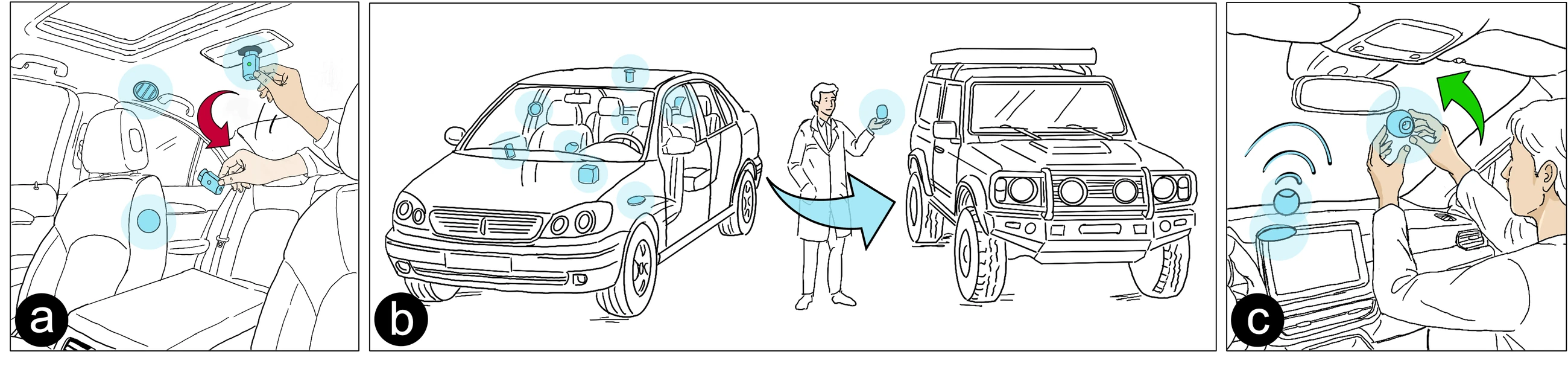
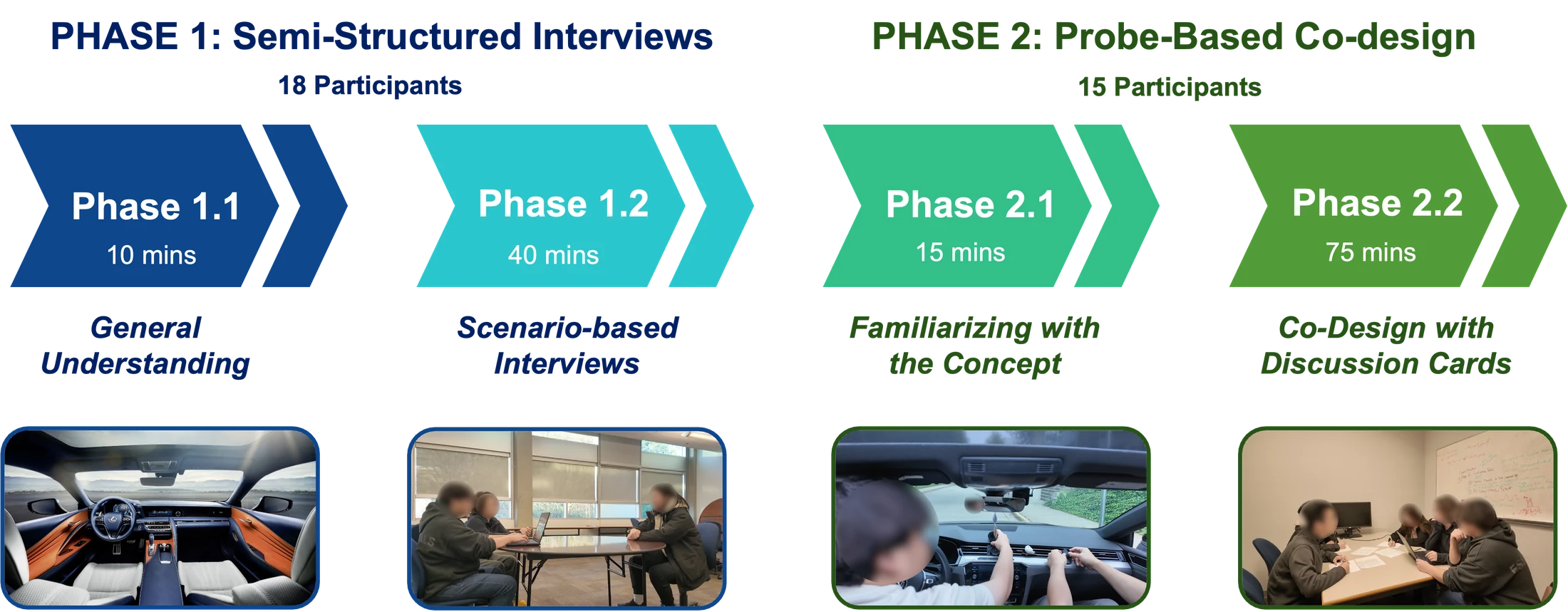
In this paper, we explore a novel approach that leverages retrofitting to create sensor-powered smart car cabins. We propose that retrofitting offers a promising way to complement and extend the capabilities of built-in smart cabin sensors provided by car manufacturers. To understand how retrofitting solutions should be designed, we conducted a two-phase study. First, through semi-structured interviews with 18 participants, we examined challenges with built-in smart cabin sensors and identified opportunities where retrofitting could address these limitations. Second, through probe-based participatory design sessions with 15 participants, we identified user requirements and expectations for effective retrofit solutions. Based on our findings, we present a set of design recommendations to guide the future development of retrofit methods for smart car cabins.
Study design
From everyday limitations to situated co-design
We began with interviews to understand where factory-installed cabin sensors fall short, then moved into the car itself so participants could explore what a configurable retrofit system should support. This sequence connected broad concerns about customization, repair, upgrades, and portability to concrete installation decisions.
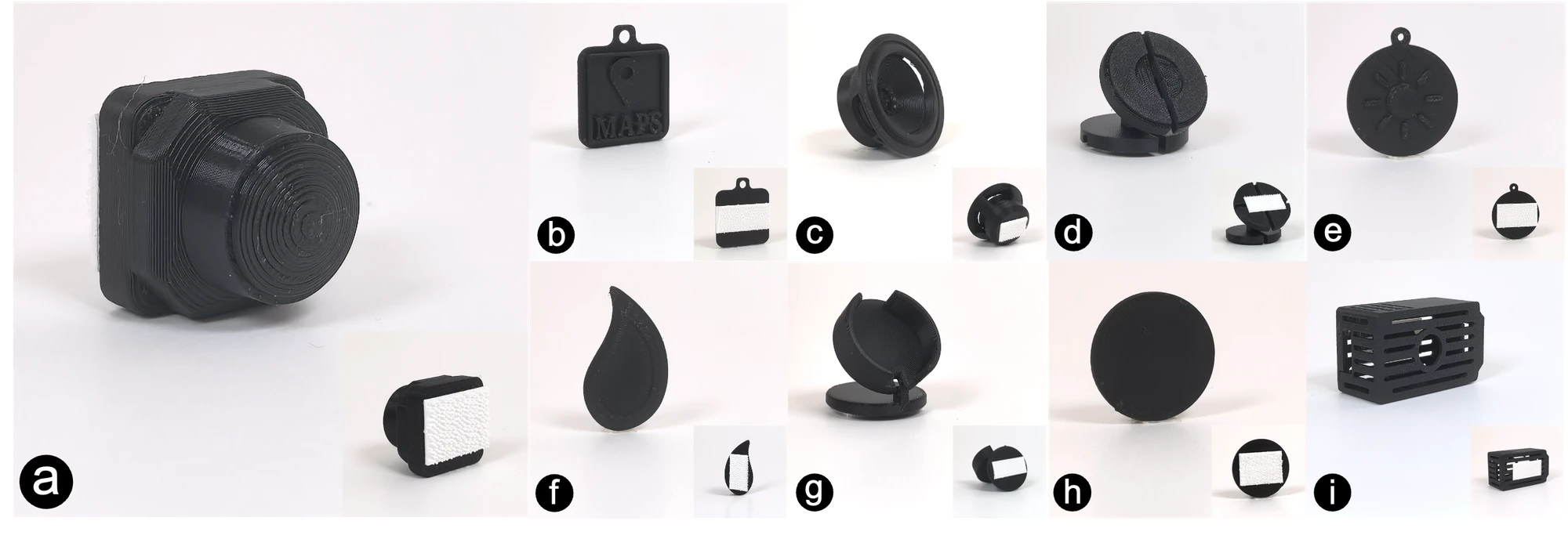
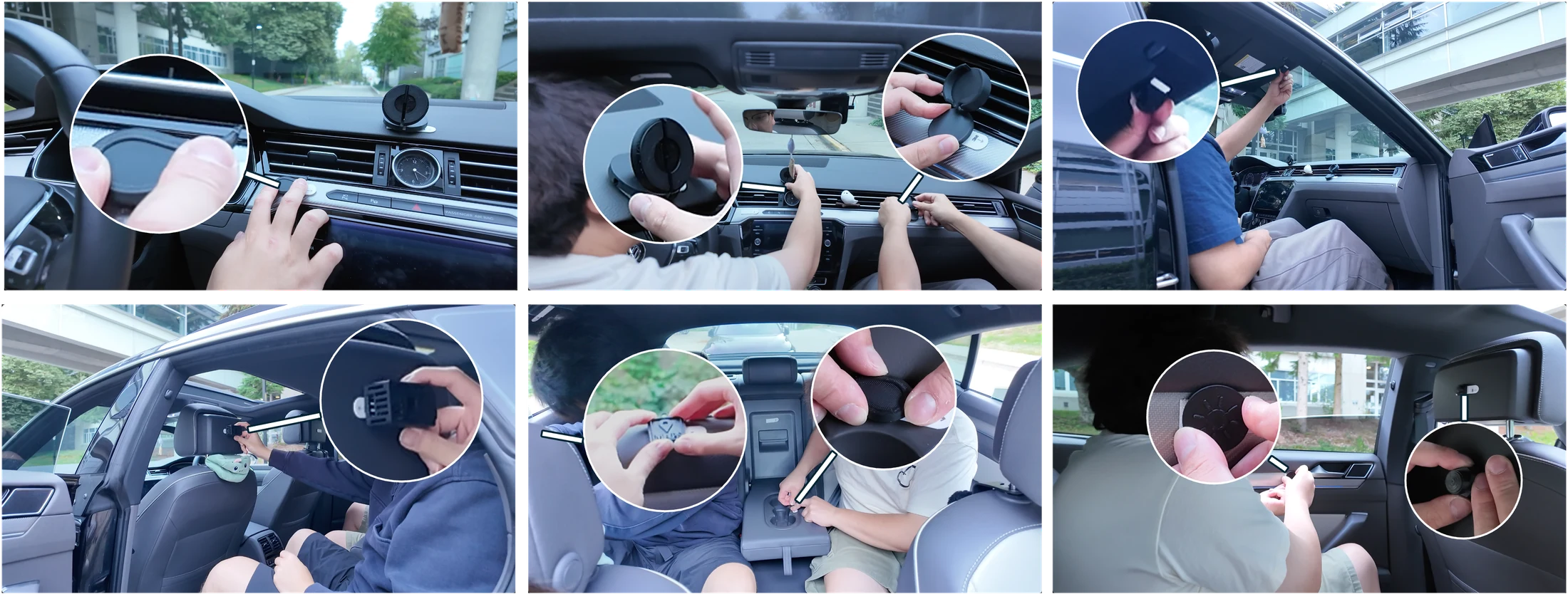
Design probes
Making sensor choices tangible
Physical mockups turned an abstract idea into something participants could hold, move, and debate. By trying placements from different seats, participants could reason about visibility, reach, sensing performance, privacy, driving safety, and how easily a setup could be removed or transferred.